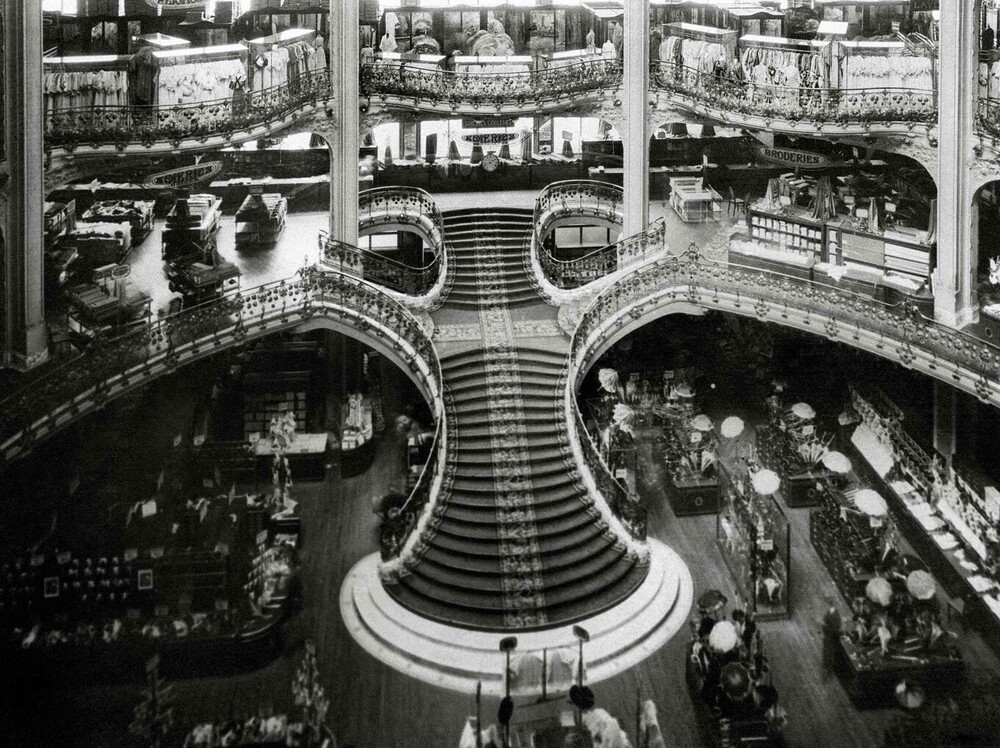

Inheriting the structure of the guild system, the retail trade was still organized in the early 19th century into specialized shops divided by product category. Hats, shoes, fabrics—a fashionable woman had to visit many different shops to put together her wardrobe. With the emergence of department stores in the mid-19th century, a transformation in buying and selling practices began. These new retail formats made it possible, for the first time, to bring together under one roof everything necessary for a woman’s wardrobe: accessories and trinkets, ribbons, lace, hat forms, and so on. They quickly became a huge hit with female customers and allowed a less affluent segment of the population to access a form of consumption that had previously been out of reach.
As the catalyst for a commercial revolution, the department store also led to numerous innovations such as free admission, fixed and posted prices, the option to exchange items, sales, and even mail-order sales.